
X-Ray Scintillators for University & College Research
X-Ray Scintillators for University & College research sit behind experiments in physics labs, chemistry benches, geology departments and engineering workshops, and Analytical Components supply the phosphor scintillators and screens that academic teams put to work every day. Universities and colleges run an unusually wide mix of projects under one roof, and the same family of scintillation products can serve nearly all of them. This page looks at the subjects that rely on X-ray detection, the way we tailor each order to a department, and how to reach us once you are ready to talk a project through.
The Subjects That Rely on X-Ray Detection
Few suppliers see as broad a spread of uses as the academic sector does. A scintillator converts X-rays into visible light that a photomultiplier tube or a CCD/CMOS sensor can read, and that single ability sits underneath very different lines of research.
Chemistry and materials science departments rely on X-ray diffraction to work out crystal structure, and scintillation counters have long been used in the detectors that count the diffracted beam. Physics teaching and research labs use scintillators for X-ray and gamma spectroscopy, where each flash of light is proportional to the energy of the radiation, so a student or researcher can record a spectrum and identify an isotope. Geology and earth science groups use X-ray imaging to study rock and mineral samples without breaking them apart, while engineering and microelectronics teams use the same radiographic approach to inspect components and assemblies. Across all of this, X-Ray Scintillators for University & College Research give departments a dependable way to turn radiation into a clear, recordable signal.
Tailored to Each Course and Project
Academic demand for scintillation keeps growing as research reaches into new areas, and no two departments ask for quite the same thing. We manufacture to each customer’s specification, supplying a large single order for a shared facility as readily as a one-off piece for a particular rig. If a research group is matching a scintillator to an existing detector or beamline, we can advise on the right screen for the job, and we are happy to put an NDA in place where the work is confidential. That flexibility is why X-Ray Scintillators for University & College Research from Analytical Components suit undergraduate teaching labs as well as funded research groups.
Made to a Standard You Can Document
Research has to be repeatable, and so do the parts that feed it. X-Ray Scintillators for University & College research are made in our Class 10,000 (ISO 7) cleanroom under ISO 9001:2015 accreditation, so every screen leaves us with the same uniform coating and the same dependable response. For a department that has to record and defend its methods, that consistency is worth as much as the scintillator itself. We also keep in close contact while an order is in progress, by phone, email or a visit to our facility in St Leonards on Sea, which we welcome.
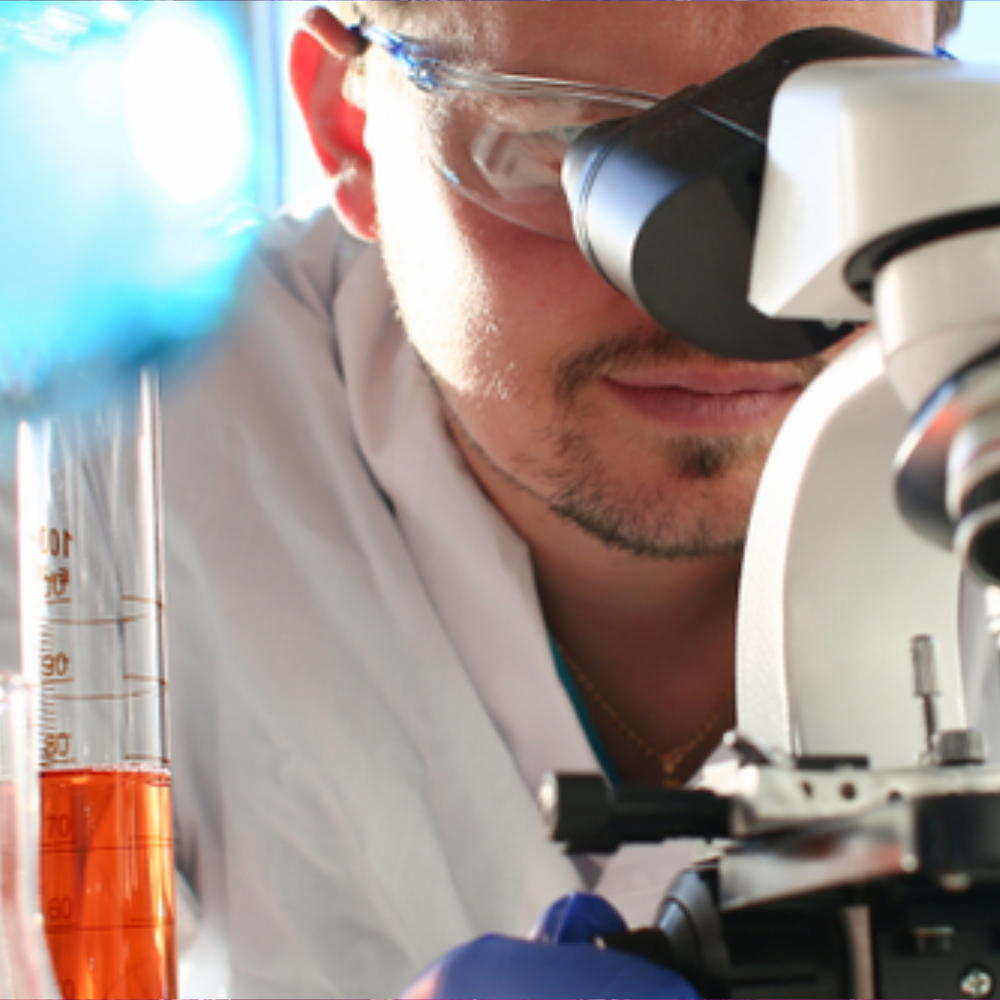
The Subjects That Rely on X-Ray Detection
Few suppliers see as broad a spread of uses as the academic sector does, because so many disciplines depend on X-ray methods.
Chemistry and materials science departments rely on X-ray diffraction to work out crystal structure and identify the phases in a sample, and scintillation counters have long been used in the detectors that count the diffracted beam. Physics teaching and research labs use scintillators for X-ray and gamma spectroscopy, where each flash of light is proportional to the energy of the radiation. That lets a student or researcher record an energy spectrum and identify an isotope, which is the same principle that underpins much of the radiation detection work in nuclear and particle physics.
Geology and earth science groups use X-ray imaging to study the inside of rock, drill core and mineral samples without breaking them apart, mapping density and internal structure. Engineering, metallurgy and microelectronics teams use the same radiographic approach for non-destructive inspection, checking welds, castings, circuit assemblies and finished components for internal defects and confirming that they meet specification. Biomedical and medical research groups use scintillators in imaging and dosimetry studies. Across all of these fields, X-Ray Scintillators for University & College research give departments a dependable way to record a clear signal from a sample they often cannot afford to damage or replace.
The Subjects That Rely on X-Ray Detection
Few suppliers see as broad a spread of uses as the academic sector does, because so many disciplines depend on X-ray methods.
Chemistry and materials science departments rely on X-ray diffraction to work out crystal structure and identify the phases in a sample, and scintillation counters have long been used in the detectors that count the diffracted beam. Physics teaching and research labs use scintillators for X-ray and gamma spectroscopy, where each flash of light is proportional to the energy of the radiation. That lets a student or researcher record an energy spectrum and identify an isotope, which is the same principle that underpins much of the radiation detection work in nuclear and particle physics.
Geology and earth science groups use X-ray imaging to study the inside of rock, drill core and mineral samples without breaking them apart, mapping density and internal structure. Engineering, metallurgy and microelectronics teams use the same radiographic approach for non-destructive inspection, checking welds, castings, circuit assemblies and finished components for internal defects and confirming that they meet specification. Biomedical and medical research groups use scintillators in imaging and dosimetry studies. Across all of these fields, X-Ray Scintillators for University & College research give departments a dependable way to record a clear signal from a sample they often cannot afford to damage or replace.
Choosing the Right Phosphor for the Job
Not every experiment needs the same scintillator, and part of our work is helping research teams pick the right one. Phosphors are designated by the letter P followed by a number, and they are often rare-earth compounds combined with an activator. That activator sets how the phosphor behaves, because it can lengthen the emission time, known as afterglow, or shorten it where a fast and clean response matters more.
The choice usually comes down to a few questions. What energy range are you working in? Do you need a brighter signal or a sharper image? Is speed or sensitivity the priority? A setup built for fast measurements at lower resolution calls for a different phosphor than slower, more sensitive work. Matching the screen to the detector and the experiment is what gives a clean, repeatable result, which is why we are happy to talk through the options for X-Ray Scintillators for University & College Research before you commit to an order rather than after.
Why Research Teams Choose Analytical Components
Research has to be repeatable, and so do the parts that feed it. Analytical Components are ISO 9001:2015 accredited, so we can consistently supply products that meet customer and regulatory requirements, which is a useful assurance for any department documenting its methods. Our scintillators are coated in a Class 10,000 (ISO 7) cleanroom by a skilled, experienced team using high-quality raw materials, giving each screen the same uniform coating and dependable response. We take a personal approach, respect confidentiality with NDAs where needed, handle large-scale and bespoke orders alike, and supply universities and colleges around the world. That is why X-Ray Scintillators for University & College Research from Analytical Components are trusted across academic research.
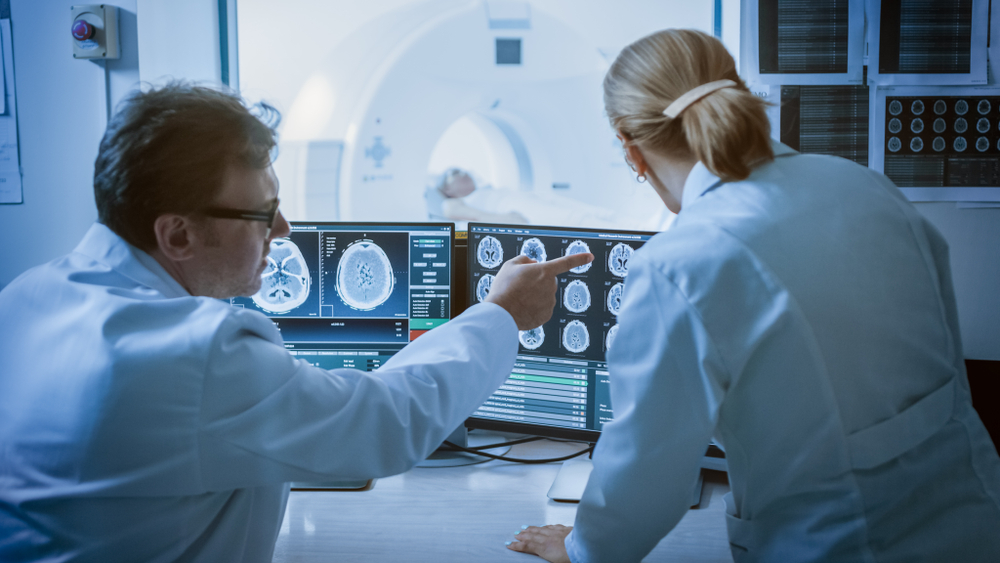
Next Steps
X-Ray Scintillators for University & College Research are straightforward to arrange with us. Fill in our contact form, email info@analyticalcomponents.co.uk, or call +44 (0) 1424 850004 to talk through what your department needs. You can also browse our products pages to see the full range of scintillation equipment we supply, and to find the right setup for your teaching and research.
Analytical components scintillators are essential in various fields, enhancing precision in hospitals, medical imaging, dental imaging, and veterinary imaging for accurate diagnostics and treatment. They are crucial for security screening and industrial inspection, ensuring safety and quality. Additionally, scintillators drive advancements in nuclear research and support innovation in university & college research.